
Silicone 3D printing: Flexible parts without the need for tooling
Need flexible, durable components without the cost and lead time of traditional tooling? Silicone 3D printing could provide the answer.
Silicone has long been used across industries for components such as seals, gaskets, covers and flexible parts. However, producing custom silicone components traditionally requires moulds and tooling, which can make prototyping and low-volume production expensive and time-consuming.
At 3D Print Bureau, we can now offer silicone 3D printing using Stratasys P3™ technology, giving businesses a new way to produce functional silicone parts directly from digital designs.
What is silicone 3D printing?
3D printing silicone has historically presented challenges due to the material’s flexibility and curing characteristics. Stratasys’ P3 technology has been developed specifically to overcome these challenges, combining a purpose-developed silicone material with a precise digital manufacturing process.
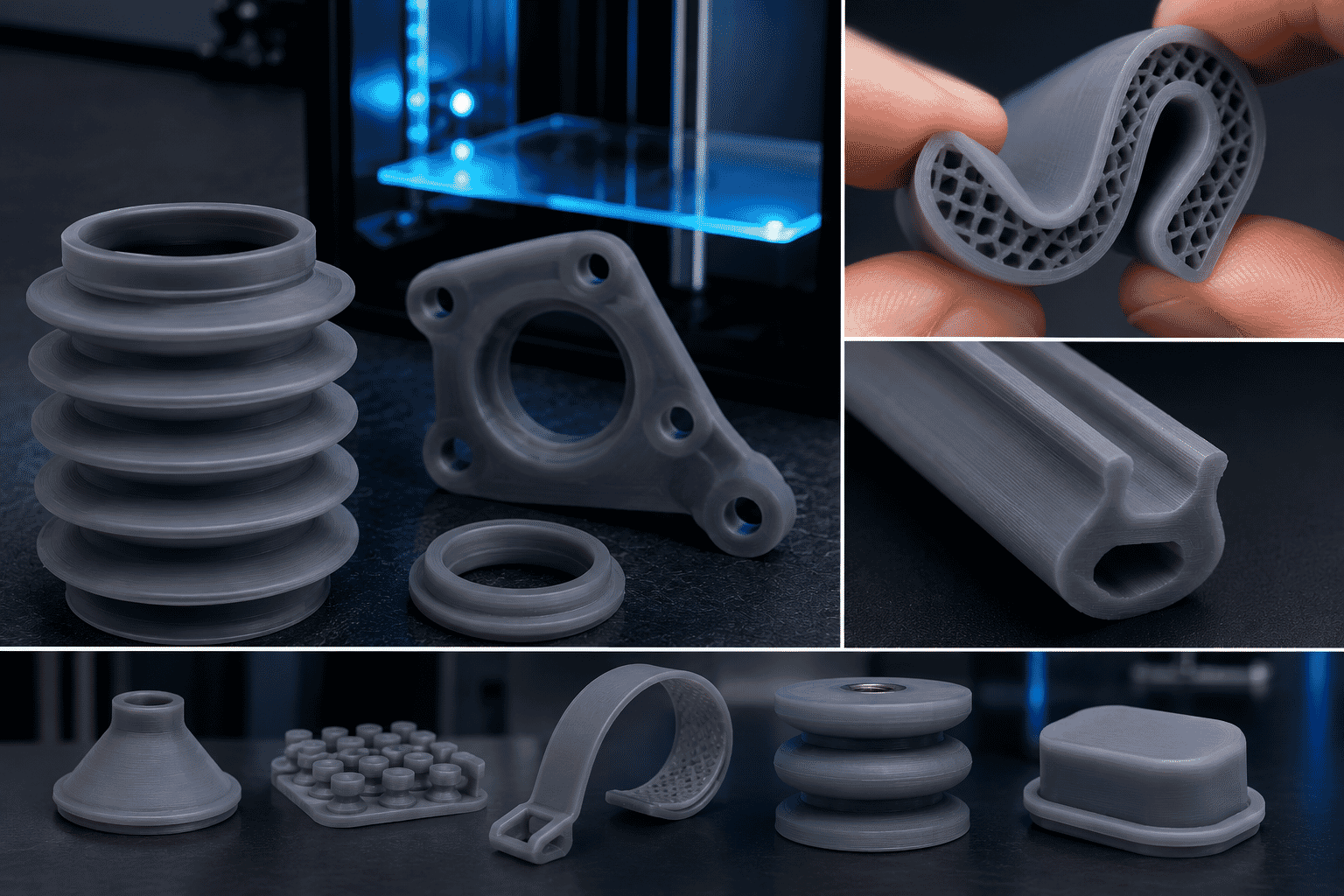
We use P3 Silicone 25A, a true silicone material with a Shore A hardness of 25. It delivers the flexibility, elasticity and durability expected from silicone, alongside resistance to tearing, chemicals and temperature changes.
This makes it suitable for producing functional components rather than simply prototypes that look like the final part.
Why choose 3D printed silicone?
One of the biggest advantages of silicone additive manufacturing is the ability to produce parts directly from CAD without first creating dedicated tooling.
This can make a significant difference when you’re developing a new product, producing bespoke components or only require a relatively small production run.
Faster design iterations
When a design needs changing, there is no need to manufacture a new mould. Simply update the digital design and produce the next iteration.
This allows engineers to test different geometries, improve performance and move from concept to functional part more quickly.
Cost-effective low-volume production
Traditional silicone manufacturing can involve significant tooling costs, particularly for small production runs.
3D printing allows you to produce the quantity you need, when you need it, making it an attractive option for prototypes, customised components and low-volume production.
Greater design freedom
Additive manufacturing opens up possibilities for complex geometries that may be difficult or costly to produce using conventional methods.
Features can be incorporated directly into the design, helping engineers create components specifically around their application.
What can you 3D print in silicone?
The combination of flexibility, durability and design freedom makes P3 Silicone 25A suitable for a wide range of applications.
Depending on your requirements, silicone 3D printing can be used for:
- Seals and gaskets
- Flexible covers and protective components
- Damping and cushioning parts
- Wearable products
- Customised components
- Functional prototypes
- Low-volume production parts
Silicone is already widely used across industries including automotive, industrial manufacturing, consumer products and healthcare, and 3D printing can provide greater flexibility when producing customised or low-volume components.
Why use 3D Print Bureau for silicone 3D printing?
At 3D Print Bureau, we give you access to industrial additive manufacturing technology without the need to invest in your own equipment.
Our team can work with your CAD data to understand your application, advise on the most appropriate approach and manufacture your components using Stratasys’ P3 Silicone 25A technology.
Whether you need a single functional prototype, a bespoke component or a small production run, outsourcing to the Bureau gives you access to industrial-grade technology and our additive manufacturing expertise, without the capital investment of bringing the technology in-house.
Discover what silicone 3D printing could make possible
Silicone 3D printing is opening up new possibilities for manufacturers looking to produce flexible, functional components faster and without the traditional cost of tooling.
If you’re considering silicone for your next project, our team can help you explore whether additive manufacturing is the right solution for your application.
Get in touch with the Bureau team to discuss your application and discover what silicone 3D printing could make possible.