

What MACH 2026 Told Us About the Future of UK Manufacturing
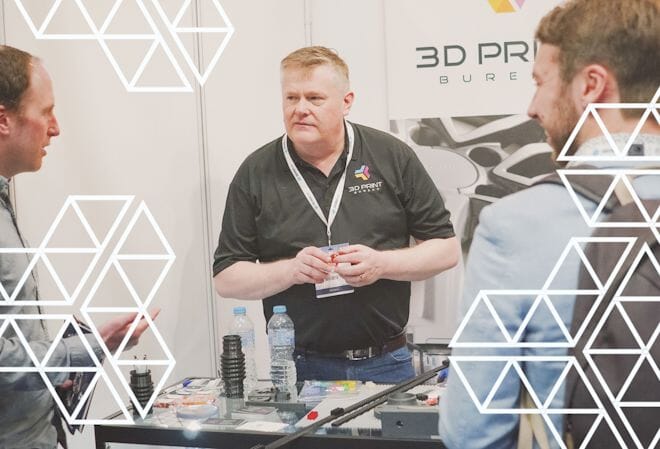
MACH 2026 showed how UK manufacturers are using Industrial 3D Printing to boost agility and efficiency.
The conversations across the show floor reflected the challenges facing UK manufacturers today. Rising production costs, supply chain pressure, skills shortages, and the continued push toward digitised manufacturing are forcing businesses to rethink traditional production methods.
For many manufacturers, Industrial 3D Printing is becoming a key part of that strategy. The ability to reduce lead times, accelerate product development, and produce low-volume, high-value components more efficiently is helping businesses stay agile in an increasingly demanding market.
Manufacturers Are Becoming More Educated About Additive Manufacturing
One of the most noticeable shifts at MACH 2026 was the growing level of technical understanding among manufacturers exploring additive manufacturing solutions.
Customers are increasingly aware of which materials, technologies, and production methods may suit their applications. Conversations are now focused less on whether a part can be 3D printed, and more on which material will deliver the right mechanical, thermal, or chemical performance.
This growing knowledge is helping drive wider adoption of industrial additive manufacturing across UK industry. At the same time, there remains a clear need for specialist guidance to ensure manufacturers select the right technology and material for long-term production success.
“It Doesn’t Always Need to Be Metal”
A major trend throughout the exhibition was the growing acceptance of advanced polymers as a viable alternative to traditional metal tooling.
Many manufacturers were surprised by the strength, heat resistance, fatigue endurance, and chemical resistance now achievable with industrial polymer materials.
Applications such as fixtures, holding jigs, sheet metal forming tools, and end-of-arm tooling can often be produced faster, lighter, and more cost-effectively using high-performance polymers.
One material generating strong interest was NYLON 12CF, a carbon-fibre-reinforced thermoplastic designed for demanding production environments. Its stiffness and durability make it particularly well suited to replacing metal tooling in a range of manufacturing applications.
Flexible Materials Are Creating New Opportunities
It was also clear that manufacturers are looking beyond rigid materials alone.
Interest in flexible, durable elastomers continues to grow, particularly for applications requiring resilience, sealing performance, and long-term durability in demanding environments.
At MACH 2026, manufacturers responded particularly positively to P3 Silicone 25A. With excellent tear strength, elongation, chemical resistance, and stability across wide temperature ranges, the material is well suited to seals, gaskets, wearable products, and industrial applications requiring both flexibility and durability.
Industrial 3D Printing Is Moving Into Mainstream Manufacturing
Perhaps the biggest takeaway from MACH 2026 is that Industrial 3D Printing is no longer viewed purely as a prototyping tool.
Across UK manufacturing, additive manufacturing is increasingly being adopted as a practical production solution that supports operational agility, reduces costs, and enables faster innovation.
As manufacturers continue to modernise operations and build more resilient supply chains, Industrial 3D Printing is becoming an increasingly important part of the future manufacturing landscape.